
Heroes of the Big Scrub is an inspiring story of landscape scale restoration. The video showcases the people who understood the processes of rainforest restoration ecology, and have dedicated their life's work to enabling substantial recovery of the Big Scrub against all odds. The video looks at the role of assisted natural regeneration and revegetation [...]
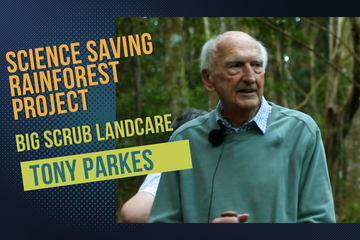
Tony Parkes – Science Saving Rainforest Project – Big Scrub Landcare (AABR AGM Guest Speaker)
Suzanne Pritchard2022-03-24T05:56:44+10:00Big Scrub Landcare are now driving an innovative program to ensure that all plantings use genetically diverse planting stock to overcome potential inbreeding and build greater adaptability to climate change within the landscape. Dr Tony Parkes (AO) - retired organic chemist and merchant banker (turned rainforest restorer) - is the Founder and President of Big [...]
Assessing priorities for post-fire bush regeneration
Suzanne Pritchard2020-09-22T07:00:10+10:00Weed affected bushland will need help to recover after fire, but resources are usually limited, and it's difficult to predict exactly what will happen over time. How can you make the most of your time and effort? This is an overview of post-fire site assessment. It’s a complex topic, particularly considering the extreme drought [...]
Assisting regeneration after fire: why it’s so important
Suzanne Pritchard2021-04-15T11:26:27+10:00How can we help the bush to recover after fire? The native plants usually have the capacity to regenerate (unless the damage is particularly severe), but where weeds are involved, they probably need assistance. With the right approach, we can make a big difference. Here is an intro to post fire weed control, with [...]
Big Scrub – making a vision of genetically appropriate seed production areas a reality :: Tony Parkes :: SERA Conference 2018
mitra2020-04-01T20:28:42+10:00Rainforest restoration pioneers, Big Scrub Landcare, are again at the forefront of restoration ecology investigating solutions to the problem of genetic inbreeding in the hundreds of thousands of Big Scrub plantings. With the long term viability of the Big Scrub and associated investment at stake, they have developed a strategy to test for genetic diversity, [...]
Be prepared: climate change & the NSW bushfire threat :: Lesley Hughes, Macquarie University, Climate Council of Australia :: NCC Bushfire Conference 2015
mitra2020-04-01T20:28:43+10:00Be prepared to take a deep breath as Prof Lesley Hughes walks through the known data and possible futures in a climate-changing world. The evidence for climate change is outlined, the trends discussed and impacts of extreme events elaborated. Examples of future scenarios are provided within the context of bushfire impacts, particularly in NSW. A [...]
Popes Glen field day series :: Revegetation :: AABR Field Day Sept 2017
mitra2020-07-08T14:46:27+10:00The Popes Glen Bushcare Group set up a vegetation trial to determine what plants would survive in the harsh conditions of the weed infested silt flat. Armed with a successful species list, funding was sought and thousands of plants planted. Bird surveys have informed the revegetation process with bird habitat thickets unintentionally created from weed [...]
Upping the ante on restoration-landscape scale restoration on Travelling Stock Reserves in the NSW Riverina :: Ian Davidson. Regeneration Solutions :: AABR Forum 2016
mitra2020-07-08T15:44:07+10:00The hidden world of Travelling Stock Routes (TSRs) comes to light as Ian Davidson explains their unique role across the Riverina landscape as a stronghold for biodiversity and threatened species. The absence of agricultural production techniques and fertilisers along with their location on flat fertile soils, linearly linked, has enabled the TSRs to remain prime [...]
<
Restoration in fragmented landscapes – The importance of genetics :: Linda Broadhurst, CSIRO :: AABR Forum 2016
mitra2020-07-08T16:19:45+10:00The million dollar question of 'provenance' is eloquently described by Linda Broadhurst within the context of habitat fragmentation and climate change impacts. The talk simply explains the role of genetics in understanding inbreeding depressions and how they can arise from small population sizes or reduced parental numbers. A must see video for anyone who collects [...]
Using regional revegetation guides to inform reference ecosystems in fragmented rural landscapes of south-east Australia :: Gill Earl, Murray LLS :: AABR Forum 2016
mitra2020-07-08T16:22:30+10:00Revegetation guides can provide a valuable resource in determining a local indigenous reference community- Principle 1 of the National Restoration Standards. Gill Earl provides a walk through of the Murray-Riverina vegetation guides that are widely accepted as the go-to resource for revegetation projects in that area. The elements of the guides are outlined and why [...]